
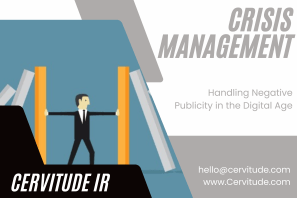
In today’s digital age, negative publicity can spread rapidly and impact a company’s reputation, investor confidence, and overall business operations. Effective crisis management is crucial to mitigate risks, maintain trust, and navigate through challenging situations. Here’s how to handle negative publicity in the digital age:
1. Preparation and Planning
a. Establish a Crisis Response Team:
- Formulate a cross-functional team comprising senior executives, legal advisors, communications experts, and key stakeholders.
- Importance: A dedicated team ensures swift decision-making, coordination, and effective crisis response.
b. Develop a Crisis Management Plan:
- Create a comprehensive crisis management plan outlining protocols, roles and responsibilities, communication strategies, and escalation procedures.
- Importance: Planning in advance enables proactive rather than reactive responses, minimizing the impact of negative publicity.
2. Monitoring and Early Detection
a. Monitor Online Channels:
- Utilize monitoring tools to track mentions, sentiment, and trends across social media, news platforms, and online forums.
- Importance: Early detection allows prompt response to emerging issues, preventing escalation and addressing misinformation swiftly.
3. Transparent and Timely Communication
a. Transparency and Authenticity:
- Acknowledge the issue promptly, take responsibility, and provide transparent updates as information becomes available.
- Importance: Transparent communication builds credibility, demonstrates accountability, and reassures stakeholders during uncertain times.
b. Centralized Communication Hub:
- Establish a dedicated communication channel (e.g., crisis website, press releases) to disseminate accurate information and updates consistently.
- Importance: Centralized communication prevents misinformation, maintains control over the narrative, and keeps stakeholders informed.
4. Engage Proactively with Stakeholders
a. Stakeholder Outreach:
- Reach out directly to stakeholders, including investors, employees, customers, and regulatory authorities, to address concerns and provide reassurance.
- Importance: Proactive engagement fosters trust, mitigates negative perceptions, and strengthens relationships amid adversity.
5. Social Media Management
a. Monitor and Moderate:
- Monitor social media platforms closely, respond promptly to comments and queries, and moderate discussions to maintain civility.
- Importance: Active social media management helps manage public sentiment, correct misinformation, and control the narrative effectively.
6. Legal and Regulatory Compliance
a. Legal Counsel Involvement:
- Consult legal advisors to ensure compliance with regulatory requirements, mitigate legal risks, and uphold ethical standards in crisis communications.
- Importance: Legal guidance protects against liabilities, guides messaging, and ensures adherence to regulatory obligations.
7. Learn and Adapt
a. Conduct Post-Crisis Analysis:
- Evaluate the crisis response, assess effectiveness of strategies implemented, and identify areas for improvement.
- Importance: Learning from the crisis enhances preparedness for future incidents, strengthens resilience, and reinforces organizational learning.
8. Maintain Business Continuity
a. Focus on Operations:
- Ensure continuity of business operations and prioritize delivering on commitments to customers, investors, and other stakeholders.
- Importance: Sustaining business operations amidst crisis demonstrates resilience, stability, and commitment to stakeholders’ interests.
Conclusion
Navigating negative publicity in the digital age requires proactive planning, transparent communication, stakeholder engagement, and adherence to ethical and regulatory standards. By establishing robust crisis management protocols, monitoring online channels vigilantly, fostering transparent communication, and learning from each crisis, companies can effectively safeguard their reputation, maintain investor trust, and emerge stronger from challenging situations. Crisis management is not just about mitigating damage but also about demonstrating resilience and leadership in times of adversity, ensuring long-term sustainability and success in a competitive business environment.