
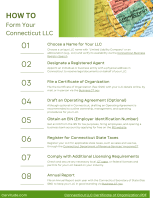
Forming a Limited Liability Company (LLC) in Connecticut is a smart way to protect your personal assets while running a business. This comprehensive guide will walk you through each step of the process to help you successfully establish your LLC in the Constitution State.
Step 1: Choose a Name for Your LLC
Your LLC name must meet the following requirements:
- Be Unique: The name must not be in use by any other registered business in Connecticut.
- Include the Required Designator: It must include “Limited Liability Company,” “LLC,” or “L.L.C.”
To check if your desired name is available, use the Connecticut Business Registry Search.
Tip: If you’ve found the perfect name but aren’t ready to file, you can reserve it for up to 120 days by filing an Application for Reservation of Name and paying a $60 fee.
Step 2: Designate a Registered Agent
Every LLC in Connecticut is required to have a registered agent. This person or business entity receives legal documents on behalf of your LLC. The registered agent must:
- Be a Connecticut resident or a business entity authorized to operate in the state.
- Have a physical address in Connecticut (P.O. boxes are not allowed).
You can act as your own registered agent, designate someone else, or hire a professional registered agent service.
Step 3: File a Certificate of Organization
The Certificate of Organization (also known as Articles of Organization) is the official document that establishes your LLC. Here’s how to file:
- Online: File through the CONCORD Business Portal.
- By Mail: Download the form, complete it, and mail it to the Secretary of State.
Information Required:
- LLC name and address.
- Registered agent’s name and address.
- Names of members or managers (optional).
- Business purpose (optional).
Filing Fee: $120
Step 4: Draft an Operating Agreement
Although not required by Connecticut law, an Operating Agreement is highly recommended. This document outlines:
- Ownership percentages.
- Roles and responsibilities of members.
- Procedures for voting, adding members, and dissolving the LLC.
Having a well-drafted Operating Agreement helps prevent disputes and ensures smooth business operations.
Step 5: Obtain an EIN (Employer Identification Number)
An EIN is essential for tax purposes and hiring employees. It’s free to apply for an EIN through the IRS website. You’ll need it to:
- Open a business bank account.
- File taxes.
- Process payroll.
Step 6: Register for Connecticut State Taxes
Depending on your business activities, you may need to register with the Connecticut Department of Revenue Services (DRS). This includes:
- Sales and Use Tax Permit (if selling goods or services).
- Withholding Tax Registration (if hiring employees).
Visit the DRS Taxpayer Service Center to register online.
Step 7: Obtain Necessary Licenses and Permits
Certain industries require additional licenses or permits at the local or state level. Check with your city or town hall and the Connecticut Department of Consumer Protection to ensure compliance.
Step 8: File an Annual Report
Connecticut LLCs must file an Annual Report every year to stay in good standing. The report includes basic information about your LLC and costs $80 to file.
- Deadline: Anniversary month of your LLC’s formation.
- File Online: Use the CONCORD Business Portal.
Why Form an LLC in Connecticut?
- Personal Asset Protection: An LLC separates your personal and business liabilities.
- Tax Benefits: LLCs have flexible tax options, including pass-through taxation.
- Professional Credibility: Operating as an LLC can boost your business’s credibility.
Ready to Start Your LLC?
I’ve created a free PDF checklist to simplify the process further. This downloadable guide includes clickable links and a streamlined breakdown of everything you need to do to form your LLC in Connecticut.
📥 Download the Checklist Here: How To Form a Connecticut LLC
#ConnecticutBusiness #LLCFormation #BusinessTips #Entrepreneurship #StartupJourney #SmallBusinessOwners