
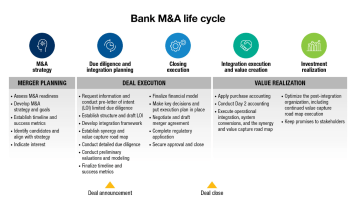
The banking industry is undergoing rapid transformation, driven by technological advancements, changing customer expectations, and evolving regulatory landscapes. To thrive in this dynamic environment, banks must adopt innovative strategies to remain competitive and sustainable. One such strategy is strategic mergers and acquisitions (M&A).
Why Strategic M&A?
Strategic M&A can provide numerous benefits for banks, including:
- Expanding Market Presence: Acquiring banks in new geographic markets or customer segments can help expand a bank’s footprint and customer base.
- Diversifying Revenue Streams: Merging with banks that offer complementary products and services can diversify revenue streams and reduce reliance on traditional banking activities.
- Enhancing Technological Capabilities: Acquiring fintech companies or banks with advanced technology can help banks modernize their operations and improve customer experience.
- Improving Cost Efficiency: Consolidating operations and eliminating redundancies can lead to significant cost savings.
- Strengthening Capital Position: Merging with well-capitalized banks can improve a bank’s capital position and enhance its ability to withstand economic downturns.
Key Considerations for Successful M&A
- Clear Strategic Rationale:
- Define a clear strategic rationale for the M&A deal, aligning it with the bank’s long-term goals.
- Conduct a thorough due diligence process to assess the target bank’s financial health, operational efficiency, and cultural fit.
- Effective Integration Planning:
- Develop a comprehensive integration plan that outlines the steps involved in merging the two banks, including system integration, customer migration, and employee retention.
- Establish strong project management and communication channels to ensure a smooth integration process.
- Risk Management:
- Identify and mitigate potential risks, such as operational risks, regulatory risks, and reputational risks.
- Develop contingency plans to address unforeseen challenges.
- Regulatory Compliance:
- Ensure compliance with all relevant regulatory requirements, including antitrust laws, banking regulations, and securities laws.
- Work closely with regulatory authorities to obtain necessary approvals and minimize regulatory hurdles.
- Investor Relations:
- Maintain open and transparent communication with investors, providing regular updates on the M&A process and its expected benefits.
- Manage investor expectations and address any concerns or questions.
By carefully considering these factors and executing a well-thought-out M&A strategy, banks can position themselves for long-term success in an increasingly competitive market.