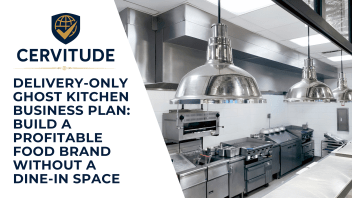
In 2025, delivery-first food businesses are exploding — and ghost kitchens are at the heart of the trend. With low overhead, flexible locations, and the ability to run multiple concepts from one kitchen, ghost kitchens (also called cloud kitchens or virtual restaurants) offer a unique opportunity for savvy food entrepreneurs.
But while the business model skips front-of-house expenses, it still demands one thing: a smart, scalable ghost kitchen business plan. Whether you’re applying for a loan, pitching investors, or simply organizing your concept, this guide will show you exactly how to write a ghost kitchen business plan that gets results.
🧑🍳 Why a Ghost Kitchen Business Plan Is Essential in 2025
Ghost kitchens eliminate the dine-in experience — but not the need for structure. A well-written business plan helps you:
- Secure SBA loans, equipment financing, or startup capital
- Win trust from landlords, commissary operators, and food delivery platforms
- Clarify your branding, pricing, and operations
- Model multiple concepts from a single kitchen (e.g., burger brand, wings, vegan bowls)
- Plan for scale and profitability in the competitive delivery market
📌 What to Include in Your Ghost Kitchen Business Plan
Here’s how to structure your business plan to appeal to lenders, investors, and delivery partners:
1. Executive Summary
- Restaurant name(s), brand concept(s), and location (commissary kitchen, shared kitchen, etc.)
- Menu type(s): fast-casual, specialty cuisine, comfort food, vegan, fusion, etc.
- Delivery platforms: Uber Eats, DoorDash, Grubhub, own app or website
- Startup funding needed and business goals
📝 Example: “FryFi Kitchen will operate as a delivery-only ghost kitchen offering three brands — chicken sandwiches, loaded fries, and plant-based burgers — from one location in Houston, TX. We are seeking $150,000 to fund kitchen buildout, equipment, and brand development.”
2. Company Overview
- Legal structure (LLC, partnership, franchise model)
- Founders’ background in food service, hospitality, or business
- Mission and vision: convenience, quality, sustainability, or speed?
- Growth potential: licensing, franchising, or launching multiple brands
3. Menu Strategy
- Outline each virtual brand’s concept and menu
- Pricing tiers and signature items
- Menu engineering (low prep time, high profit margin)
- Packaging plan (brand-specific or co-branded containers?)
- Seasonal updates or limited-time offers
4. Market Research & Industry Trends
- Online food delivery projected to surpass $45 billion in the U.S. in 2025
- Consumer behavior: convenience, late-night dining, healthier fast options
- Competitor research: local delivery-only brands and chain competition
- Demand for variety: multiple brands = higher order volume per customer
5. Marketing & Brand Strategy
- Social media ads (Instagram, TikTok, YouTube Shorts showcasing food)
- Influencer outreach and food blogger campaigns
- First-time customer discounts on Uber Eats/Grubhub
- Loyalty and rewards through your own ordering site
- Brand-specific Instagrams or unified ghost kitchen umbrella brand
6. Operations Plan
- Kitchen type: shared commissary, leased commercial kitchen, or standalone ghost kitchen facility
- Delivery integration with POS (Otter, Toast, Square for Restaurants)
- Prep and service model: batch cooking, just-in-time, timed order release
- Inventory and vendor relationships
- Packaging, labeling, and tamper-evident delivery standards
7. Staffing Plan
- Kitchen manager, line/prep cooks, and virtual order handler
- Scheduling based on peak hours and volume
- Cross-training for multi-brand execution
- Payroll projections and cost control strategies
8. Financial Projections
Include:
- Startup Costs: equipment, licenses, commissary rent, branding, food inventory, delivery setup
- Monthly Expenses: labor, rent, food cost, packaging, marketing, delivery commissions
- Revenue forecast:
- AOV (average order value) × orders/day × service days/month
- Gross margin per brand
- Breakeven analysis and 3-year forecast
- Key metrics: food cost %, delivery commission %, labor %
9. Funding Request (if applicable)
- Total capital needed (e.g., $150,000)
- Use of funds: $70K for kitchen equipment, $30K for branding/marketing, $25K working capital, $25K labor/onboarding
- Desired funding method: SBA 7a loan, private investor, revenue-based financing
- Expected ROI or loan repayment plan
💡 Pro Tips for a Profitable Ghost Kitchen
- Keep it simple. Fewer ingredients across more dishes = higher margins and less waste
- Test your brands. Run social ads to validate demand before launching a full menu
- Own your traffic. Use delivery platforms to grow — but capture direct orders with your own site
- Focus on speed + consistency. 20-minute ticket times and quality packaging make or break your reviews
🧾 Need a Ghost Kitchen Business Plan Built for Growth?
At Cervitude LLC, we’ve helped food entrepreneurs, chefs, and cloud kitchen operators launch and scale with business plans that secure funding and simplify growth. Whether you’re operating one brand or five from one kitchen, we’ll help you build a plan that’s lean, strategic, and investor-ready.
👉 Visit Cervitude.com today and let’s write the ghost kitchen business plan that takes your virtual restaurant brand to the next level.